Starting a box truck business is one of the most practical ways to enter the transportation and logistics industry. With growing demand for local and regional deliveries—from e-commerce to furniture and equipment transport—box trucks offer flexibility, scalability, and strong income potential.
This guide walks you through everything you need to know to build a box truck business from the ground up.
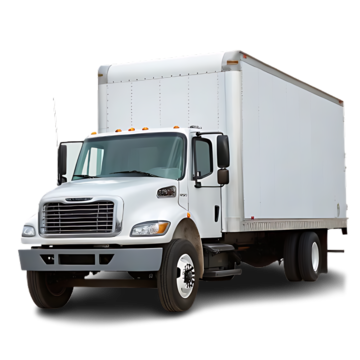
A box truck business operates using medium-sized commercial vehicles—commonly called box trucks or straight trucks—to move goods for customers. Because these trucks are fully enclosed, they provide greater protection for cargo during transportation compared to open-bed vehicles.
Box truck businesses are highly versatile and support many different industries, including:
Starting a box truck business is easier than entering the semi-truck industry, mainly because most box trucks do not require a commercial driver’s license (CDL). This makes it possible to begin hauling freight and earning income without going through the time-consuming and expensive CDL process.
Whether your goal is to build a fleet, operate as an owner-operator, or run a part-time side business, the following five steps will guide you through how to start a box truck business successfully.
From a legal standpoint, you can’t operate a box truck business until it’s properly registered. You’ll need to choose a legal structure and register your business in your home state. While a sole proprietorship is an option, most trucking businesses choose to form an LLC or corporation to protect personal assets and support future growth, especially if you plan to scale into a fleet.
This number functions as your business’s federal tax identification, similar to a Social Security number for a company. You can apply for an EIN online through the IRS, or review guidance and resources provided by the U.S. Small Business Administration (SBA).
If you plan to operate across state lines using your own operating authority, you must register for a USDOT number and an MC number through the FMCSA. The FMCSA provides an online tool to help determine whether you need a DOT number, an MC number, or both.
Obtaining operating authority requires a $300 registration fee. To activate your authority, you must also have active insurance on file and complete a BOC-3 filing.
Important for intrastate carriers:
If you plan to operate only within your home state, an MC number may not be required. However, your state may still require a motor carrier authority. Check with your state’s Secretary of State or DMV for specific requirements.
To legally operate a box truck business—especially across state lines—you are required to maintain a Driver Qualification (DQ) file for each driver. This applies even if you are an owner-operator and even if a CDL is not required.
The DQ file must include required documentation proving the driver is qualified to operate a commercial vehicle. Be sure to collect all initial DQ file documents, including an employment application—even if you are your own employer.
After your business is set up, it’s important to separate personal finances from business expenses. At a minimum, this means opening a dedicated business checking account.
You should also consider obtaining a business credit card or fuel card to begin building business credit. Establishing strong business credit can help you qualify for better equipment financing rates and gain easier access to other financial resources as your business grows.
Lorem ipsum dolor sit amet, consectetur adipiscing elit. Ut elit tellus, luctus nec ullamcorper mattis, pulvinar dapibus leo.
Listing statistics for: